
Key Points:
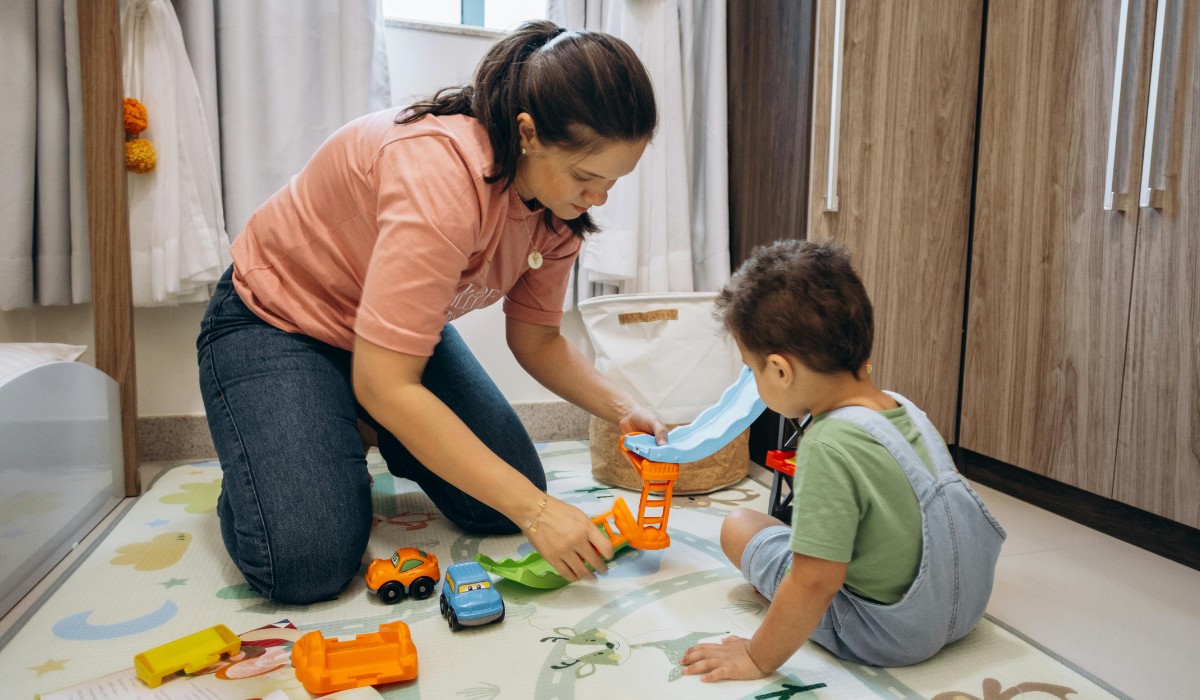
- Personalized Social Skill Building: Prime Path ABA creates individualized programs that help children develop communication, turn-taking, emotional regulation, and real-world social skills at their own pace.
- Real-Life Practice That Sticks: Skills are practiced across home, school, and community settings in Ohio, helping children confidently apply what they learn in everyday interactions.
- Support That Grows With Your Child: From early play skills to more complex social situations, ABA therapy evolves as your child grows—building confidence, connection, and long-term independence.
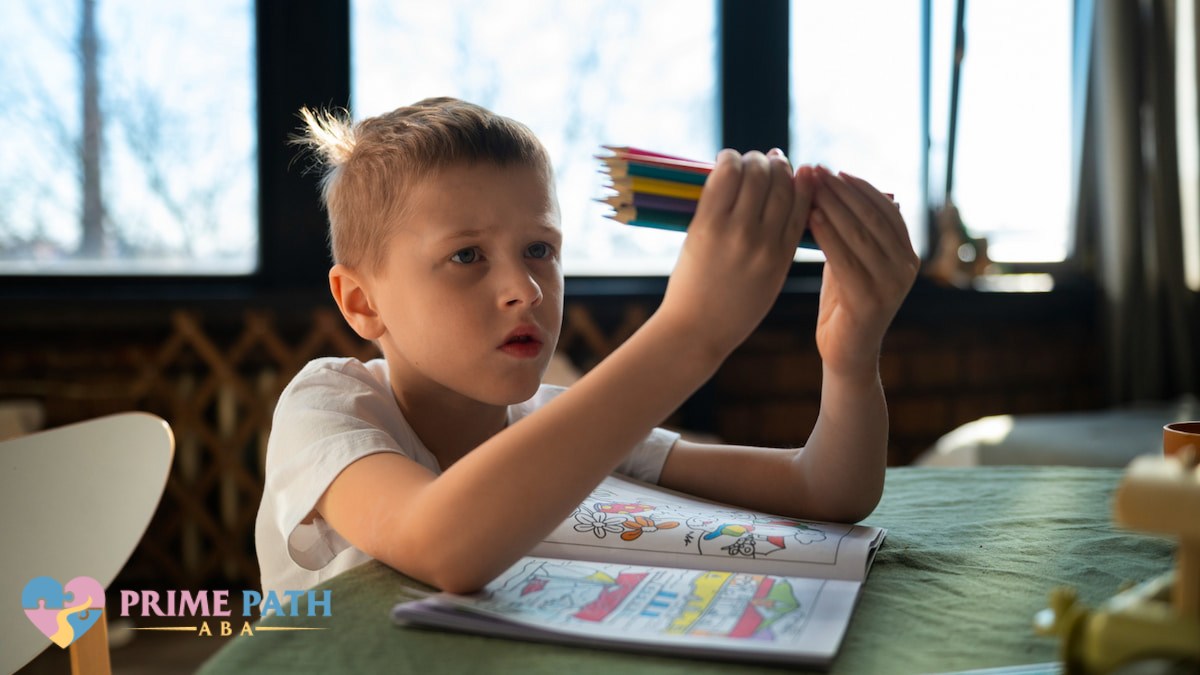
Children with autism spectrum disorder (ASD) often face challenges in connecting with others. Every smile, word, or gesture is part of learning how to understand and interact. ABA therapy social skills help children improve how they engage, play, and communicate. This evidence-based approach uses structured lessons and positive reinforcement to turn everyday moments into learning opportunities. With guidance from trained therapists, children gradually build real connections, practice social routines, and gain confidence in interactions.
Autism Therapy Social Interaction
Social interaction is more than just talking, it’s about understanding others’ feelings, reacting appropriately, and sharing experiences. For children with ASD, these skills don’t always come naturally. ABA (Applied Behavior Analysis) therapy focuses on teaching them one step at a time through repetition, encouragement, and tailored strategies.
The therapy uses structured teaching, where behaviors are broken down into smaller, teachable parts. For instance, learning to say “hello” may start with maintaining eye contact before adding a greeting word.
Here’s how ABA therapy nurtures social interaction:
- Step-by-step guidance: Skills like turn-taking or greeting peers are taught gradually.
- Reinforcement: Positive feedback, praise, or tokens motivate children to repeat desired behaviors.
- Modeling: Therapists demonstrate proper behavior, then the child practices it.
Over time, children begin to generalize what they learn in therapy to real-world settings, such as classrooms or playgrounds, where they can enjoy meaningful social exchanges.
Autism Social Skills Development
Social skills involve both understanding and responding to the world around us. For children with ASD, this includes interpreting tone of voice, reading facial expressions, and recognizing social boundaries. ABA therapy uses measurable goals and practical exercises to build these abilities.
A report by Koegel et al. (2016) found that consistent ABA intervention significantly improved peer interaction and emotional recognition among children with autism. These results show how structured learning can transform how children perceive and respond to others.
Common Social Skills Taught in ABA Programs
| Skill | ABA Technique Used | Purpose |
| Initiating conversation | Role-playing | Helps start and maintain dialogue |
| Sharing and turn-taking | Natural Environment Teaching | Encourages cooperative play |
| Recognizing emotions | Video modeling | Builds empathy and understanding |
| Active listening | Discrete Trial Training | Strengthens focus and response accuracy |
| Following directions | Prompting and reinforcement | Teaches compliance and awareness |
Each activity is intentional. When a therapist teaches a child to take turns during play, it’s not just about sharing toys, it’s about learning patience, cooperation, and fairness.
Hypothetical Example: Imagine a child named Liam who struggles to join group play. In therapy, his BCBA (Board Certified Behavior Analyst) creates mini social games where he practices saying, “Can I play, too?” After several weeks of role-play and reinforcement, Liam learns to approach peers with confidence, transforming what was once a struggle into a skill.

How ABA Therapy Strengthens Everyday Social Behaviors
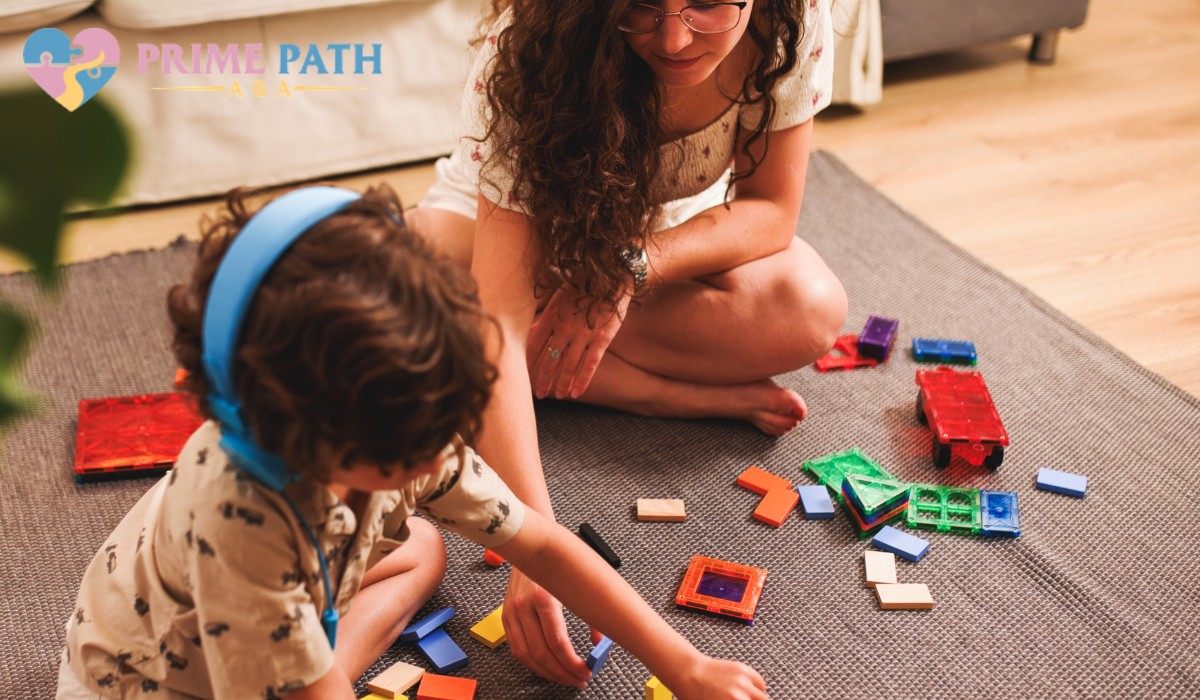
ABA therapy social skills programs are designed to help children with autism apply what they learn in real-life situations. Through structured practice, repetition, and positive reinforcement, children build confidence and independence in daily social interactions.
1. Role-Playing Scenarios in ABA Therapy
Role-playing is a core strategy used in play-based ABA therapy to support autism social interaction. It allows children to safely practice everyday situations in a supportive, low-pressure environment. Research by Leaf et al. (2017) shows that children who participate in guided role-play during ABA therapy demonstrate improved conversational turn-taking and stronger emotional recognition skills.
Therapists may simulate real-world scenarios such as:
-
Meeting new classmates at school
-
Asking a teacher or peer for help
-
Inviting a friend to join a game
Each session includes clear feedback and reinforcement, helping children refine social responses and generalize these skills beyond therapy sessions.
2. Positive Reinforcement and Social Skill Development
Positive reinforcement is foundational to ABA therapy benefits autism outcomes. Based on B. F. Skinner’s behavioral principles (Cooper et al., 2020), rewarding desired behaviors increases the likelihood they will occur again. For example, when a child maintains eye contact or initiates communication, therapists offer verbal praise or tangible rewards. This strengthens the connection between positive social behavior and successful interaction.
3. Group Sessions and Peer-Based ABA Learning
Group-based ABA sessions play a vital role in building autism social skills. Research by Matson et al. (2019) indicates that peer-based ABA therapy helps children transfer learned behaviors into natural environments. Through observation, imitation, and guided interaction, children practice cooperation, turn-taking, and communication with peers in meaningful ways.
ABA Therapy Benefits Autism: Building Empathy and Emotional Understanding
Developing empathy and emotional awareness is essential for successful autism therapy social interaction. ABA therapists use structured teaching methods such as storytelling, modeling, and visual supports to help children recognize emotions in themselves and others.
For example, children may be shown visual cards displaying emotions like happiness, sadness, or frustration and asked to identify how a person feels. Over time, they learn not only to recognize emotions but also to respond appropriately during social exchanges.
Studies by Gulsrud et al. (2010) demonstrate that early ABA-based emotional training significantly improves empathy, emotional regulation, and peer relationships among children with autism.
Emotional Regulation Techniques Used in ABA Therapy
ABA therapy also targets emotional regulation autism challenges using practical, evidence-based strategies, including:
-
Deep breathing and counting exercises to manage frustration
-
Visual emotion charts to support emotional identification
-
Replacement behaviors that teach children to express needs through communication rather than challenging behavior
By combining social skills training with emotional understanding, ABA therapy helps children build meaningful relationships and navigate everyday social situations with greater confidence and ease.
Improving Nonverbal Communication Skills in ABA Therapy
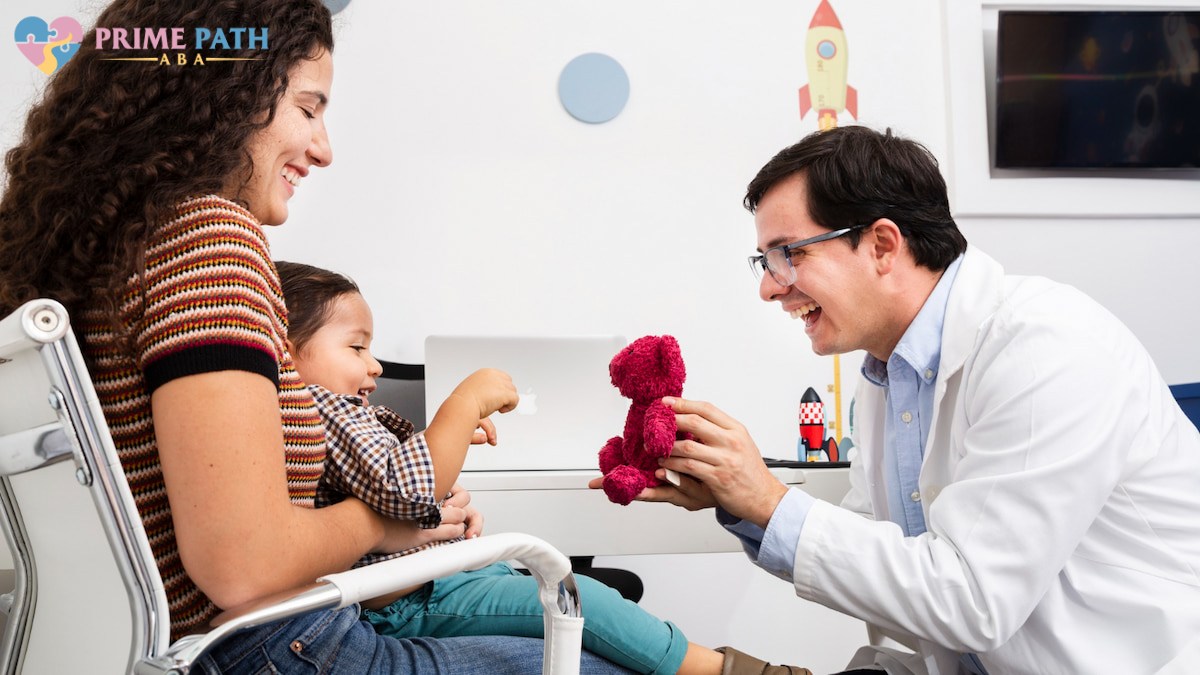
Nonverbal communication autism challenges—such as understanding body language, facial expressions, gestures, and tone of voice—can make social interaction difficult for children on the spectrum. ABA therapy social skills programs directly address these challenges by teaching nonverbal cues in a structured, supportive way.
Using evidence-based strategies like video modeling, children observe examples of appropriate behavior, such as maintaining personal space, making eye contact, or smiling during greetings. Research by Charlop-Christy et al. (2000) shows that video modeling significantly improves social imitation and facial expression recognition in children with autism.
Example: A child who struggles to understand sarcasm may practice identifying tone differences through repeated exposure and labeling exercises, such as distinguishing between “happy,” “serious,” or “frustrated” tones. Over time, these skills strengthen overall autism social interaction and social awareness.
These small, consistent gains help children engage more confidently and comfortably in everyday social situations.
Social Skills ABA Children: Overcoming Individual Challenges
Every child with autism learns differently, which is why social skills ABA children programs are highly individualized. ABA therapy customizes strategies based on each child’s strengths, sensory needs, and communication abilities.
Common ABA strategies for overcoming social challenges include:
-
Gradual exposure to social settings to reduce anxiety and build confidence
-
Visual supports, such as picture schedules, to clarify social expectations
-
Practicing predictable “safe scripts” for common interactions (e.g., “Hi, my name is ___”)
A study by Lang et al. (2010) found that systematic exposure combined with positive reinforcement significantly reduced social anxiety symptoms in children with autism during peer interactions—demonstrating key ABA therapy benefits autism outcomes.
Autism Therapy Social Interaction in Real-World Settings
A core goal of autism therapy social interaction programs is generalization—the ability to apply learned social skills across different environments. ABA therapy emphasizes consistency and collaboration to help children succeed beyond the therapy room.
Real-world ABA practice strategies include:
-
Community walks: Teaching children how to greet neighbors and respond politely
-
Playground role-play: Practicing sharing, waiting turns, and cooperative play
-
School collaboration: Partnering with teachers to reinforce ABA strategies in the classroom
Through these experiences, children learn that social expectations vary by setting—an essential skill for navigating daily life and building independence.
Long-Term Impact of ABA Therapy on Social Growth
Long-term research supports the effectiveness of ABA therapy social skills training in developing meaningful communication and interaction abilities. Many children receiving structured ABA interventions demonstrate measurable improvements in social communication within a few years.
As children grow, these learned behaviors form a strong foundation for independence, inclusion, and long-term success. Children who once struggled with basic communication often go on to build friendships, participate in group activities, and engage confidently at school, in their communities, and eventually in the workplace.
Practical ABA Techniques in Action
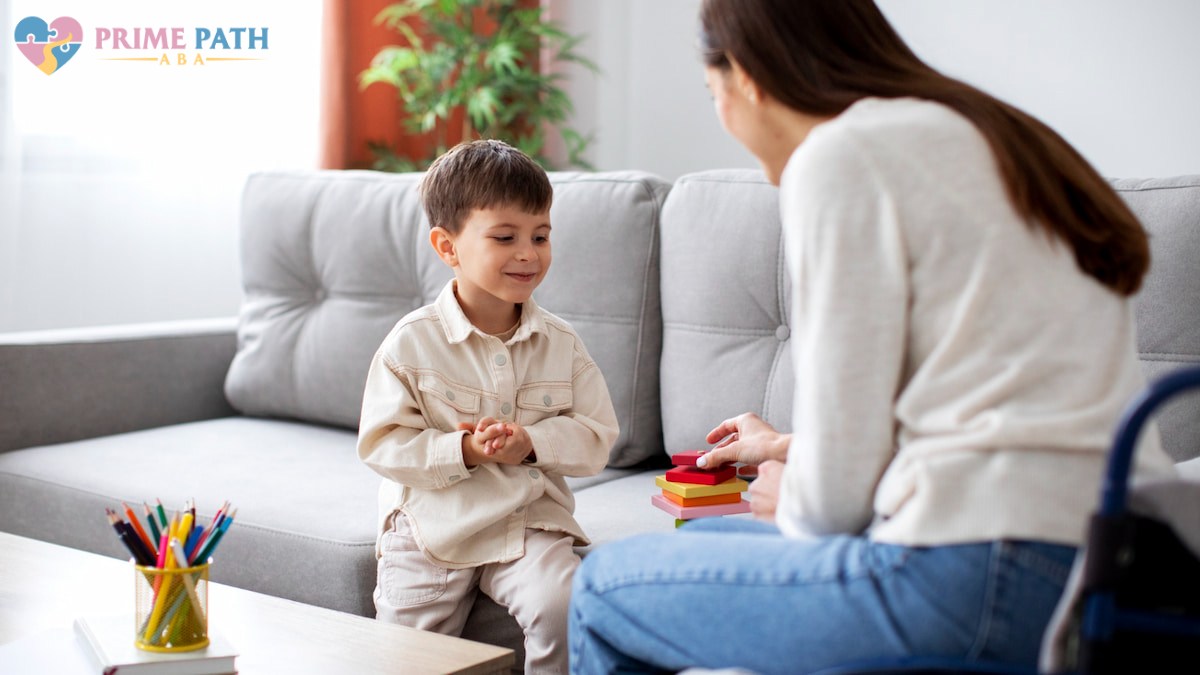
Each of these focus areas highlights how targeted ABA methods can nurture essential communication, emotional, and social abilities in real-life settings.
| Focus Area / Skill Focus | Technique Used | Outcome / Goal | Example |
| Communication | Discrete Trial Training (DTT) | Improves clarity and turn-taking | A therapist uses picture cards to teach a child to request toys by saying “I want a ball,” gradually reducing prompts until the child initiates independently. |
| Peer Interaction | Natural Environment Training (NET) | Strengthens play-based skills | During outdoor play, a therapist encourages a child to share a swing with a peer, reinforcing positive interaction with verbal praise and high-fives. |
| Emotional Regulation | Storytelling, Modeling, and Tailored Coping Strategies | Builds awareness, empathy, and respectful interactions | A therapist reads a short story about a character managing anger, then models deep-breathing techniques for the child to practice. |
| Listening Skills | Prompt Fading | Enhances attention span | The therapist starts by giving clear, step-by-step instructions for a simple game, then slowly reduces verbal cues as the child learns to listen and follow independently. |
| Initiating Conversation | Role-Playing | Fosters communication ease and engagement | The therapist and child take turns pretending to meet new friends, practicing greetings like “Hi, what’s your name?” in a playful scenario. |
| Understanding Social Cues | Social Stories and Modeling | Aids comprehension of social expectations | The therapist uses a visual story showing how to wait for a turn during group play, then practices the skill through guided playtime. |
| Eye Contact | Discrete Trial Training (DTT) | Develops comfort in interactions | The therapist holds a favorite toy near their eyes and rewards the child for making brief eye contact before handing it over. |
| Active Listening | Chaining and Prompting | Enhances meaningful connections and responsiveness | The therapist teaches the child to listen to short stories and answer simple questions, first prompting responses, then linking steps until the child responds independently. |
These tailored ABA therapy social skills interventions ensure that learning sticks, helping children not just imitate, but truly understand the purpose behind each social behavior.
ABA Therapy Benefits Autism: Key Gains
-
Improves verbal and nonverbal communication: Children develop stronger speaking, listening, and nonverbal communication autism skills.
-
Encourages empathy and emotional understanding: ABA teaches emotional regulation autism strategies and helps children recognize and respond to others’ feelings.
-
Fosters cooperation during group activities: ABA children programs for social skills promote turn-taking, sharing, and collaboration in play and learning settings.
-
Reduces social anxiety through exposure and repetition: Gradual, structured practice supports confidence in social situations.
-
Builds adaptability across multiple environments: Skills learned in therapy transfer to school, home, and community, supporting autism social interaction in real-world settings.
Every lesson is a step toward meaningful connection. Play-based ABA therapy doesn’t just teach behavior—it builds bridges that empower children to participate fully in their world and thrive socially.
FAQs
Q1: Can a child who mainly uses non-verbal communication still benefit from social skills-focused ABA?
Absolutely! ABA therapy social skills programs are customized for each child. For non-verbal children, therapy focuses on alternative communication methods such as picture exchange systems or digital devices. Therapists also teach skills like turn-taking during play, responding to physical cues, and other functional social skills ABA strategies. The goal is to boost meaningful autism social interaction, regardless of communication style.
Q2: How does ABA teach “unwritten social rules” that children with autism often miss?
ABA uses tools like Social Stories, video modeling, and structured routines to make abstract social rules clear. Children with autism benefit from predictable, step-by-step instruction. Complex behaviors—like waiting in line, respecting personal space, or reading social cues—are broken down into actionable steps, helping children understand and apply them in real-world situations.
Q3: Can social skills learned in therapy transfer to busy settings like birthday parties?
Yes. ABA emphasizes generalization, practicing skills across multiple settings and social contexts. Therapists gradually introduce new environments and distractions, helping children confidently apply play-based ABA therapy strategies in noisy, dynamic situations like birthday parties, playgrounds, or community events.
Q4: How does ABA help a child with a narrow interest, like trains, interact socially?
Therapists use a child’s interests as a learning tool. For example, if a child loves trains, ABA sessions may incorporate that interest to teach social skills ABA children programs like sharing, taking turns, asking questions, and listening. This keeps children engaged while building meaningful autism social interaction skills.
Q5: Do social skills lessons change as a child with autism grows into adolescence?
Yes. Core ABA techniques—modeling, prompting, and positive reinforcement—remain, but the focus evolves. Younger children learn foundational, play-based ABA therapy skills like greetings and sharing. Teens progress to more advanced social skills, including managing peer conflicts, understanding dating norms, navigating job interviews, and holding longer, meaningful conversations.
Social connections shape how children see the world. With Prime Path ABA therapy, children with autism learn to interact, express themselves, and take part in daily life. Families in Ohio rely on Prime Path ABA for structured teaching, positive reinforcement, and plans tailored to each child’s strengths. Therapy focuses on practical skills like turn-taking, reading social cues, and managing emotions.
These steps help children build stronger relationships and gain confidence over time. Every child moves at their own pace, and the right support can make learning social skills easier and more rewarding. If you want to help your child grow socially, reach out today. Our team in Ohio can guide them through real-life interactions, school experiences, and everyday moments where social skills matter most.




 Call Us Now