
Key Points:
- Symbolic and pretend play are essential for autistic children’s development, supporting language, social-emotional skills, cognitive flexibility, and creativity.
- Imaginative play therapy and functional play training provide structured, engaging ways to nurture pretend play, helping children practice social scenarios, problem-solving, and emotional expression.
- Following the child’s lead and incorporating interests makes play meaningful and motivating, while visual supports, modeling, and gradual complexity encourage symbolic thinking.
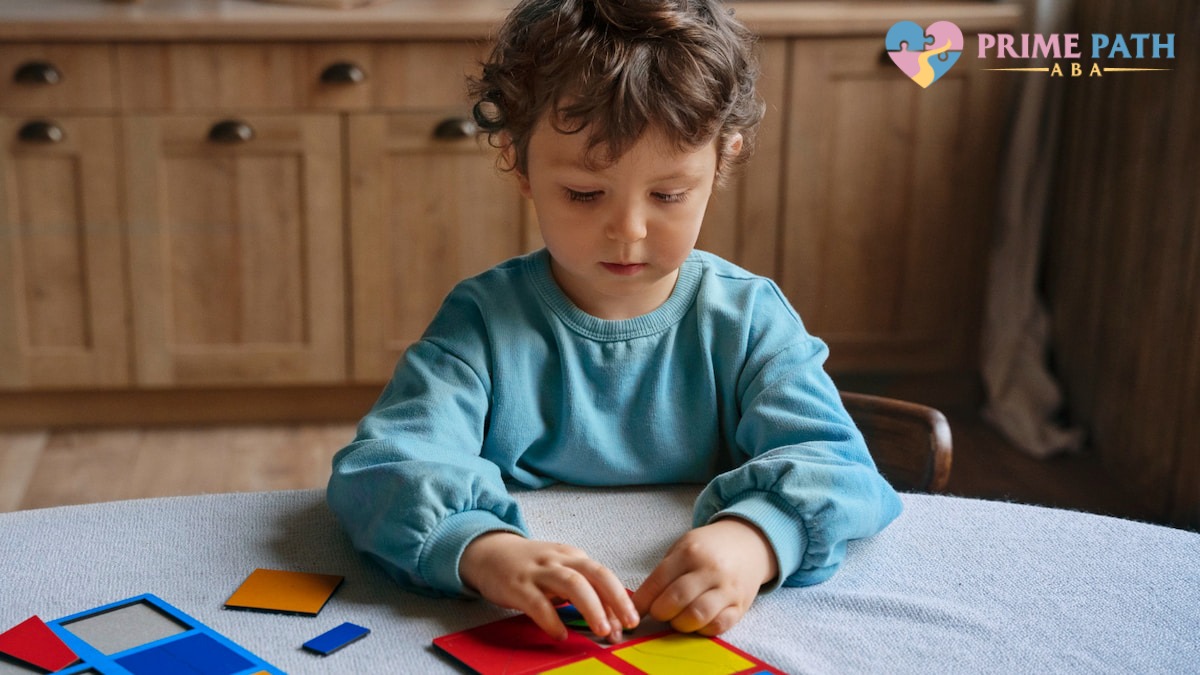
What Is Symbolic Play Development?
Research shows that pretend play, symbolic play, and role-playing are essential milestones for children, fostering cognitive growth, social-emotional skills, and language development.
Autistic children may approach these play experiences differently, often preferring structured, sensory-driven, or interest-based activities. With the right strategies, creative play skills can be nurtured, and children can thrive in imaginative play therapy and functional play training.
Symbolic play development begins around 12–18 months, when children start using objects or actions to represent other things, like a block as a phone or a box as a car.
This type of play advances from simple self-directed actions to complex, cooperative scenarios by ages 3–5.
Key Stages of Symbolic Play
- Pre-symbolic (8–12 months): Infants understand object function but don’t pretend (e.g., putting a toy phone to their ear).
- Early Symbolic (12–18 months): Simple self-directed pretend, like drinking from an empty cup.
- Decentered Symbolic (18–24 months): Pretend directed outward, such as feeding a doll.
- Combined/Complex Symbolic (24–36 months): Combining actions into sequences and exploring roles.
- Sociodramatic Play (3–5+ years): Cooperative imaginative play with scripts, roles, and peers.
 Key Benefits of Symbolic Play for Autism
- Language and Communication Development: Promotes vocabulary growth and practical language use in everyday scenarios.
- Social and Emotional Growth: Supports turn-taking, role-playing, perspective-taking, and safe exploration of emotions.
- Cognitive Flexibility: Encourages viewing objects and situations in multiple ways, reducing rigid thinking.
- Problem-Solving and Creativity: Enhances imagination, planning, and organizational skills.
- Self-Esteem Boost: Completing pretend or goal-oriented activities builds confidence.
Examples of Implementation
- Using everyday items creatively, like a stick as a magic wand.
- Role-playing familiar scenarios, such as a store, a doctor, or a restaurant.
- Acting out emotions to navigate fear, anxiety, or other feelings.
Common Play Scenarios in Autism
- Repetitive Functional Play
- Example: Spinning cups or lining up toys in order rather than pretending.
- Focus: Sensory or physical properties of objects, not symbolic or social use.
- Limited Pretend Play (Object Substitution)
- Example: Using a banana as a phone might result in literal use (eating it) or ignoring the prompt.
- Scripted or Rigid Play
- Example: Playing with a toy train set only in a fixed sequence without deviation.
- Focus: Comfort in predictability; challenges with imaginative variation.
 Strategies to Encourage Symbolic and Pretend Play
- Use Functional Toys First: Start with realistic items before introducing abstract substitutes.
- Model Actions: Demonstrate pretend behaviors (e.g., make a doll eat or sleep).
- Follow the Child’s Lead: Join in their play and gently add small variations.
- Incorporate Interests: Use favorite themes or toys to motivate participation.
- Use Visual Supports: Pictures, scripts, or video modeling can scaffold imaginative scenarios.
- Gradually Build Complexity: Start with simple, one-step actions, then combine into sequences.
- Sensory Materials: Sand, water, or textured toys make play more engaging and enjoyable.
Role-Playing and Functional Play Training
Role-playing autism helps children practice social skills in a controlled environment. Scenarios can include:
- Ordering food at a restaurant
- Greeting peers
- Navigating a store or public space
Functional play training teaches children to use toys as intended, supporting cognitive, language, and social-emotional growth. Examples include:
- Cause-and-effect toys: pressing buttons, rolling cars
- Routine-based play: feeding or dressing dolls
- Constructive play: building towers, forts, or sensory creations
Tips for Implementation
- Model and narrate actions to support language.
- Introduce slight variations to repetitive play for flexibility.
- Structure safe, organized play spaces to reduce stress.
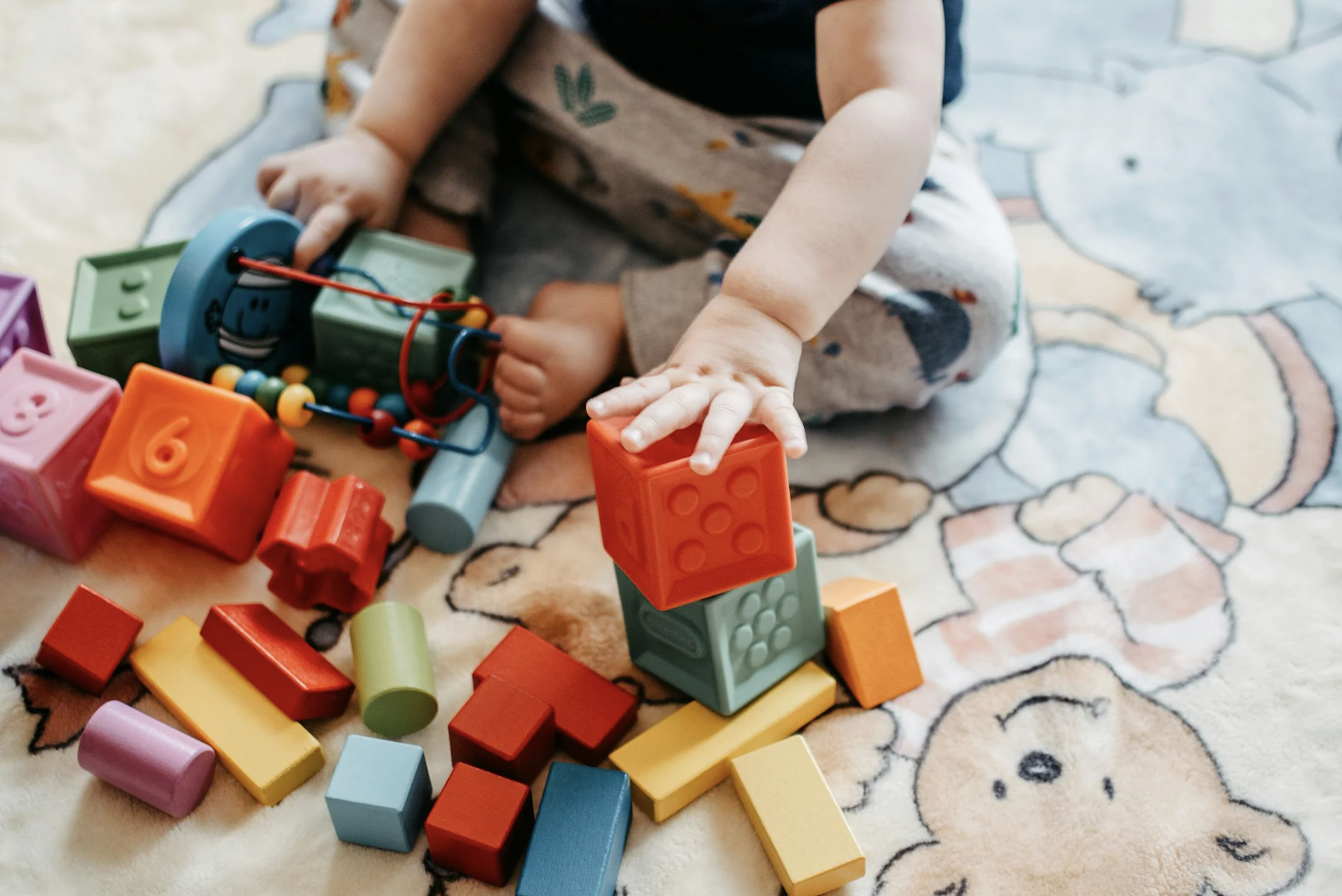
Encouraging Play at Home
- Provide open-ended toys like blocks, costumes, and household items.
- Follow the child’s lead, allowing them to direct scenarios.
- Engage in pretend roles together to strengthen connection and communication.
- Celebrate small imaginative achievements to build confidence.
Imaginative play therapy and symbolic play development are crucial tools for helping autistic children grow in language, cognition, social-emotional skills, and self-confidence. By understanding and supporting their unique play styles through creative play skills, role-playing autism, functional play training, and pretend play strategies, children can thrive both at home and in therapy, turning everyday play into a powerful learning opportunity.
FAQs: Pretend Play and Symbolic Play in Autism
- What is symbolic play, and why is it important for autistic children?
Symbolic play, also called pretend play, is when children use objects, actions, or ideas to represent something else, like a block as a phone. For autistic children, it supports language development, social-emotional growth, cognitive flexibility, and creative problem-solving.
- At what age does symbolic play typically develop?
Symbolic play usually begins around 12–18 months with simple self-directed actions and progresses to complex, cooperative, imaginative play by ages 3–5.
- How does imaginative play therapy help autistic children?
Imaginative play therapy provides a safe, structured space for children to express emotions, practice social skills, and develop communication, empathy, and self-confidence through pretend scenarios, role-playing, and storytelling.
- What are common play patterns in autistic children?
Autistic children often engage in:
- Repetitive functional play (spinning toys, lining items up)
- Literal or limited pretend play (using objects only for their real function)
- Scripted or rigid play (following strict sequences without variation)
- How can parents encourage pretend and symbolic play at home?
- Use open-ended toys like blocks, costumes, and household items.
- Follow the child’s interests and lead their play gently.
- Model actions and gradually introduce small imaginative variations.
- Use visual supports like pictures, scripts, or video modeling.
- What is functional play training, and why is it useful?
Functional play training teaches children to use toys for their intended purpose (e.g., stacking blocks, rolling cars, feeding dolls). It improves cognitive skills, language development, social understanding, and problem-solving.
- Can symbolic play improve social skills in autistic children?
Yes. Through role-playing, cooperative pretend scenarios, and guided play, children practice turn-taking, empathy, communication, and perspective-taking, which strengthen social interaction skills in real-life situations.
- How do I handle a child who prefers repetitive or sensory play?
Start by joining their play and respecting their routines. Gently introduce small variations or symbolic elements over time, using favorite toys or sensory activities to make imaginative play more engaging.
Need support with your child’s play development? Reach out to us today for guidance on imaginative play therapy, pretend play, and functional play training.




 Call Us Now