
Key Takeaways:
- Peer-mediated interventions use trained peers to model and reinforce social behaviors, helping children with autism improve communication, play, and interaction skills.
- Structured social skills groups and peer buddy programs provide natural, meaningful opportunities for practicing social interactions.
- Peer-mediated interventions benefit both autistic children and neurotypical peers, promoting empathy, inclusion, and lasting social competence.
Social skills are foundational for children to form friendships, communicate effectively, and feel included in everyday activities. For children with Autism Spectrum Disorder (ASD), developing these skills can be challenging.
Research shows that peer-mediated intervention (PMI) offers a powerful, evidence-based approach to help children with autism improve social communication, play, and interaction with their peers.
What Is Peer-Mediated Intervention (PMI)?
Peer-mediated intervention (PMI) is an Applied Behavior Analysis (ABA) strategy that trains typically developing peers to act as social models for children with autism. Through structured play, prompting, and modeling, these interventions foster social interaction in natural settings like classrooms, playgrounds, or lunch areas.
The goal is to create opportunities for autistic children to practice and generalize social skills in real-world contexts, making the learning more meaningful and lasting.
What Peer-Mediated Intervention Looks Like
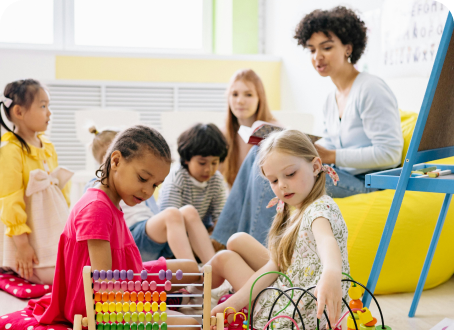
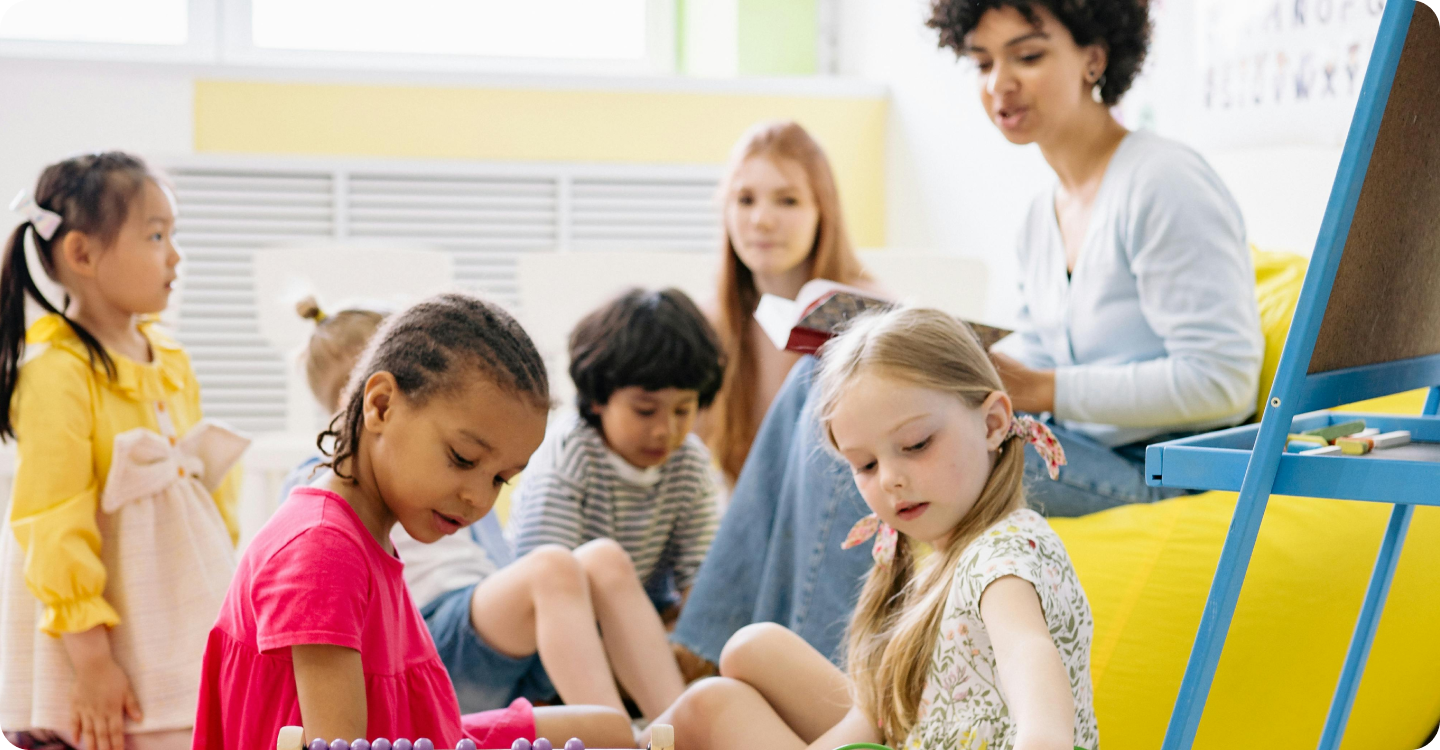
Peer-mediated interventions (PMI) and peer buddies utilize trained neurotypical peers to foster social, emotional, and communication skills in autistic students through natural, daily interactions. These interventions, including social skills groups, often involve structured activities like play, turn-taking, and problem-solving, which enhance inclusion, improve social initiations, and increase engagement across settings like classrooms or playgrounds.
Key Components and Examples
- Peer-Mediated Intervention (PMI): Peers are trained to model, initiate, and reinforce appropriate behaviors.
Example: During playtime, a trained peer prompts an autistic student by saying, “It’s your turn to pick a block,” or models a social skill like sharing, with the teacher providing positive reinforcement to both.
- Peer Buddies: Pairing a student with autism with a neurotypical peer for structured social engagement.
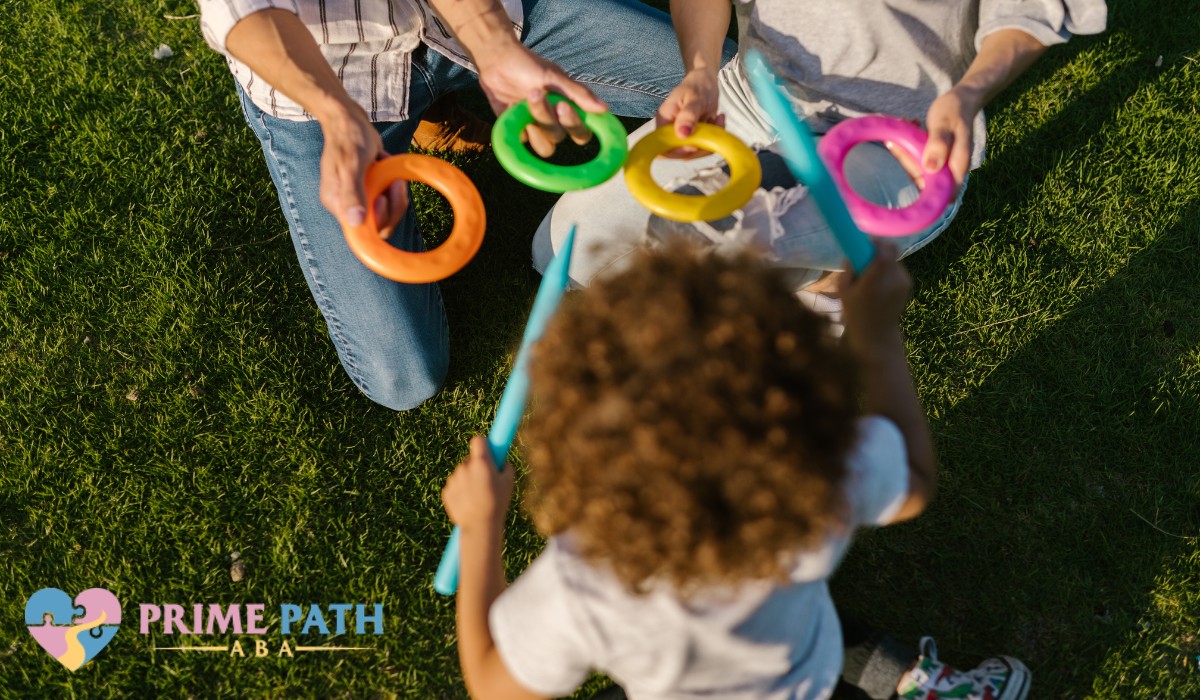
Example: A peer buddy meets with an autistic student for 5–10 minutes during recess to play a shared game, such as passing a ball, with the buddy encouraging interaction.
- Social Skills Groups: Small group settings focusing on specific interaction skills, led by a professional but using peer models.
Example: A group practice session where peers and autistic students practice identifying emotions, taking turns, or respecting personal space through role-playing.
- Peer Mediation Intervention (Conflict Resolution): Training peers to help resolve conflicts and support social navigation.
Example: A trained older student helps mediate a disagreement between classmates on the playground, encouraging communication and cooperation.
These strategies are highly effective when they are supervised by staff and integrated into daily routines, ensuring consistent support for social development.
Key Components of Peer-Mediated Intervention
PMIs are structured around several core strategies:
1. Peer Training
Typically developing peers are trained to:
- Model positive social behaviors
- Prompt and reinforce appropriate communication
- Encourage turn-taking, sharing, and cooperative play
2. Structured Activities
Interventions often occur through structured, engaging activities such as:
- Social skills groups
- Collaborative play
- Peer buddy programs
- Role-playing scenarios
3. Environmental and Adult Support
Teachers or paraprofessionals supervise peers, providing guidance and gradually fading support as the child becomes more independent. Tools like play-doh, building blocks, and visual cues help facilitate interaction.
Peer Buddies and Social Skills Groups
Two common implementations of PMI include peer buddies and social skills groups.
- Peer buddies pair a neurotypical student with an autistic child for structured social interaction. Activities can include lunch, recess games, or collaborative classroom tasks. Peer buddies help reduce isolation, encourage friendship, and teach empathy to all participants.
- Social skills groups bring small groups of peers together to practice skills like joint attention, conversation, sharing, and emotion recognition. These groups often use role-playing, guided interaction, and feedback to reinforce learning.
Both methods provide naturalistic, daily opportunities for children to build confidence and improve their social functioning.
Who Benefits from Peer-Mediated Intervention?
PMIs are effective for children and youth who need support in social communication, play, and interaction skills, including:
- Children with Autism Spectrum Disorder (ASD)
- Students with developmental or intellectual disabilities
- Socially isolated children struggling to form peer relationships
- Children with emotional or behavioral challenges
- Students needing support in executive functioning
PMIs are suitable across age groups, from preschoolers (3–5 years) to middle and high school students (12–18+ years).
Signs a Child May Benefit from PMI
Some key indicators include:
- Limited interest in peers or preference for solitary play
- Difficulty with turn-taking, sharing, or cooperative play
- Trouble initiating or maintaining social interactions
- Poor understanding of social cues or non-verbal communication
- Low social motivation or engagement
When these signs are present, implementing a peer-mediated approach can help children gain social confidence and independence.
Benefits of Peer-Mediated Interventions
Research highlights several advantages of PMI in ABA therapy:
- Improved social and communication skills: Children learn eye contact, joint attention, conversation skills, and cooperative play.
- Greater generalization of skills: Practicing with peers in natural settings ensures that skills transfer beyond therapy sessions.
- Increased social motivation and engagement: Peer interactions are more motivating than adult-led activities.
- Enhanced peer relationships and reduced isolation: PMI fosters friendships, inclusivity, and social acceptance.
- Reduced undesirable behaviors: Structured peer interaction provides positive alternatives to isolation or disruptive behavior.
- Benefits for neurotypical peers: Peers develop empathy, leadership, and advocacy skills.
Overall, PMI promotes a transition from adult-led to peer-led interactions, enhancing independence and long-term social competence.
How to Access Peer-Mediated Intervention
To implement PMI:
- Identify Goals: Teachers or therapists define specific social or communication targets.
- Select Peers: Choose 1–6 socially competent peers willing to participate.
- Train Peers: Use scripts, role-playing, and guidance to prepare peers for supporting interactions.
- Implement & Monitor: Conduct short daily sessions, gradually reducing adult support.
- Collect Data: Observe and document progress to refine the intervention.
Parents seeking to support their child’s social development should connect with Prime Path ABA to access professional peer-mediated intervention services. Our team can guide families through assessment, peer selection, training, and structured implementation, ensuring children receive the individualized support they need to thrive socially and emotionally.
Take the first step today to help your child build confidence, make friends, and develop lasting social skills with us.
 FAQs
FAQs
- What is peer-mediated intervention (PMI) in autism?
Peer-mediated intervention (PMI) is an evidence-based strategy where typically developing peers are trained to model, prompt, and reinforce social and communication skills in children with autism. PMIs help children practice these skills in natural settings like classrooms, playgrounds, or during lunch, promoting meaningful peer interactions and reducing social isolation.
- How do social skills groups work for children with autism?
Social skills groups bring small groups of children together, often with peers serving as role models, to practice communication, turn-taking, sharing, and other social behaviors. These groups use structured activities and role-playing to teach and reinforce skills. Children gain confidence, improve peer interactions, and generalize these skills to everyday settings.
- What are peer buddies for autism, and how do they help?
Peer buddies pair a neurotypical peer with a child with autism to provide structured, supportive social interaction. Activities can include shared play, classroom tasks, or recess games. Peer buddies help autistic children improve social engagement, build friendships, and learn appropriate social behaviors, while peers develop empathy and leadership skills.
- Who benefits most from peer-mediated interventions?
Children and youth who may benefit include:
- Students with Autism Spectrum Disorder (ASD)
- Children with developmental or intellectual disabilities
- Socially isolated children
- Students struggling with communication, play, or social skills
- Children needing support in executive functioning or behavioral regulation
Peer-mediated interventions are effective across preschool, elementary, and secondary school age groups.
- What skills can children develop through PMIs and peer buddies?
Children can improve:
- Social communication (eye contact, joint attention, conversation skills)
- Cooperative play and turn-taking
- Sharing and problem-solving
- Conflict resolution and emotional regulation
- Peer relationships and inclusion in group activities
- How are peers trained for peer-mediated interventions?
Selected neurotypical peers receive training on how to model behaviors, prompt social interactions, provide positive reinforcement, and facilitate structured activities. Teachers, therapists, or paraprofessionals often supervise and guide peers initially, gradually fading support as the child becomes more independent.
- Can peer-mediated interventions reduce social isolation in children with autism?
Yes. PMI strategies, including peer buddies and social skills groups, are designed to increase social motivation, engagement, and friendships. By creating natural opportunities for interaction with peers, children with autism feel more included, build meaningful relationships, and reduce feelings of loneliness.
- How can parents access peer-mediated intervention programs?
Parents can work with school staff, teachers, counselors, or special educators to identify social goals for their child. Schools may then select and train peers, implement structured sessions, and monitor progress. Professional guidance from ABA-trained therapists ensures that peer-mediated interventions are effective and tailored to the child’s needs.
- Are peer-mediated interventions evidence-based?
Absolutely. Peer-mediated interventions are widely recognized as a highly effective, research-backed ABA strategy. Studies show that PMIs, social skills groups, and peer buddy programs improve social communication, reduce undesirable behaviors, and help autistic children generalize skills across multiple settings.




 Call Us Now